

Effective leadership helps companies grow, embrace new ideas, and navigate crises. Leaders set the direction of a business, shape its culture, define its values, and influence how well a team works together.
Even the most well-thought-out strategy can fall flat without strong leadership. Key qualities of a successful leader include strategic thinking, a commitment to learning, adaptability, emotional resilience, and the ability to create an environment where employees feel empowered to take initiative.
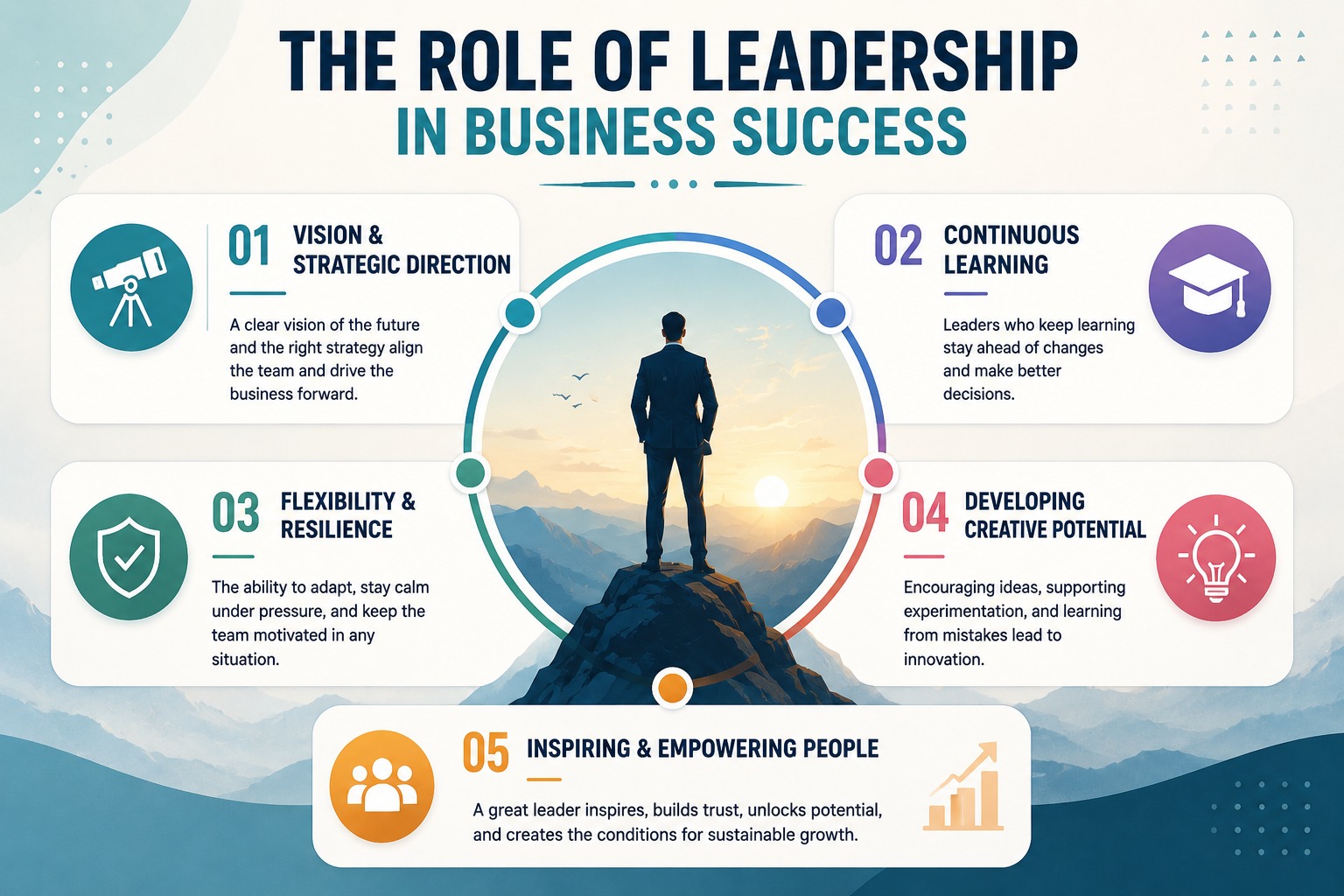
Vision and strategic direction
Having a clear picture of where a company is headed is one of the cornerstones of effective leadership. A leader must not only understand the direction of the business but also be able to communicate it clearly to their team. When employees understand the bigger goal and see how their work contributes to it, their efforts become far more aligned.
The value of strategic thinking is especially apparent in the tech industry. A leader who can assess emerging technologies, shifts in the market, and evolving customer needs helps their company identify promising opportunities faster and stay competitive.
That said, strategy goes beyond setting long-term goals. It involves decisions about resource allocation, product development, market selection, investments, and company priorities. A strong leader knows how to balance day-to-day demands with the long-term interests of the business.
Continuous learning
Today’s business environment moves fast, which means leaders can’t rely solely on the knowledge they’ve already acquired. Staying current with industry trends, technological developments, regulatory changes, and new management approaches is essential.
Executive education programs, MBAs, specialized courses, industry conferences, and peer exchange all help broaden leadership skills. But the value of learning goes beyond gaining new knowledge. It sharpens critical thinking, improves the ability to analyze complex situations, and builds confidence in making decisions under uncertainty.
A leader who actively pursues their own growth sets an example for their team. Over time, this helps build a company culture where learning, knowledge sharing, and professional development become a natural part of everyday work.
Adaptability and resilience
Businesses constantly face change — economic downturns, emerging technologies, shifting consumer demand, and unexpected crises. That’s why leaders need to be able to quickly reassess their plans and adapt their strategy to new circumstances.
The COVID-19 pandemic was a clear example of this. Companies that rapidly transitioned to remote work, digitized key processes, and rethought how they engaged with customers were better positioned to maintain business continuity.
Psychological resilience is equally important. In difficult times, employees look to their leader for cues. Staying calm, consistent, and capable of making sound decisions under pressure helps reduce team anxiety and keep morale intact.

Closely tied to this is emotional intelligence — the ability to understand your own emotions and tune into the emotional state of others. It helps leaders build trust, resolve conflict, and support their teams through periods of change.
Fostering creativity and innovation
Innovation rarely thrives in environments where employees are afraid to speak up or make mistakes. A leader’s job is to create a space where new ideas are welcomed and thoughtful experimentation is seen as a normal part of doing business.
Not every idea will pan out. But a strong leader treats setbacks as learning opportunities rather than reasons to stop trying. This mindset reduces the fear of failure and encourages employees to keep searching for better solutions.
Open communication within the team also plays a big role. When people with different backgrounds and areas of expertise collaborate, they bring multiple perspectives to the table — and that often leads to stronger, more creative outcomes.
Ultimately, leadership isn’t just about giving direction and tracking results. A strong leader sets the course, helps people reach their potential, stays grounded when things get tough, and builds the kind of environment where a business can grow alongside the market.